
In this article
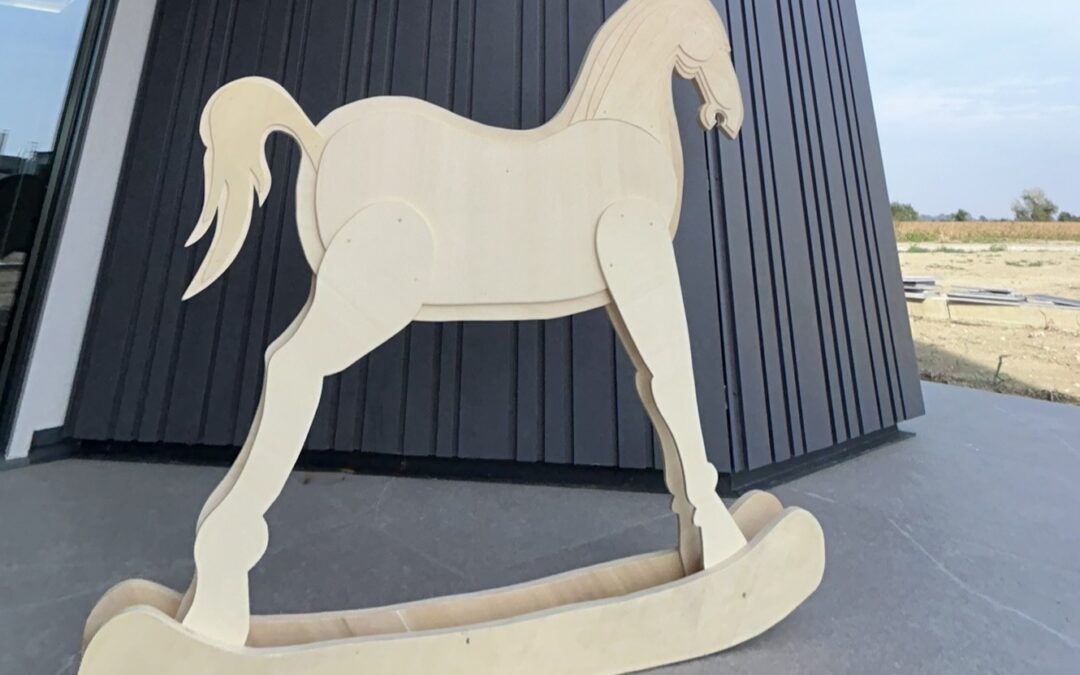
A wooden horse almost three metres tall, born for children’s theatre and now kept in our entrance hall. Its story, the close-up photos and the video are all further down.
A theatre full of children, a wide stage and, right in the middle, a giant wooden horse, 2.70 metres tall and 2.90 metres wide. Nothing else. This is how, in 1996, the children’s show Baron Munchausen by the Testoni Ragazzi di Bologna company opened. Today a copy of that horse (scaled down!) stands in our offices and welcomes visitors in the hall. The artist is still the same, Vanni Braga, and like every set he brings to the stage, it is made of plywood, from hoof to mane.
“All my sets are built from plywood, from the characters to the supporting structure, and then I draw and paint them”, he explains. The panels that leave our plant turn, in his hands, into animals, houses, vehicles and magical creatures.
Children’s theatre since the 1980s
Vanni Braga is an artist, a set designer and a theatre carpenter. Since the 1980s his name has been tied to the Teatro Testoni Ragazzi in Bologna, one of Italy’s best-known theatre companies for young audiences. Forty years of craftsmanship devoted to giving physical form to the worlds children create in their imagination: a huge animal, a house that opens up, an object that moves and transforms itself. Behind each of these images lies a sheet of plywood, cut, shaped and painted.
Different panel thicknesses to create depth
The original stage horse is not made from a single plywood panel. It has an iron frame onto which Braga screwed the legs, the body and the head, each cut out of plywood. The material had to meet very specific stage requirements: it needed to be light enough to carry around, yet strong enough to support a person’s weight and not break while being moved from one venue to another. The thickness of the panels was then decisive: “The central section, where the horse needed to be strongest, was made from 2.5-centimetre-thick plywood”, he explains, “and then tapering down, to give it depth: the belly, for example, is one and a half centimetres.”
The same reasoning went into the smaller scale horse we host in our entrance hall, recalculating every thickness, of course.
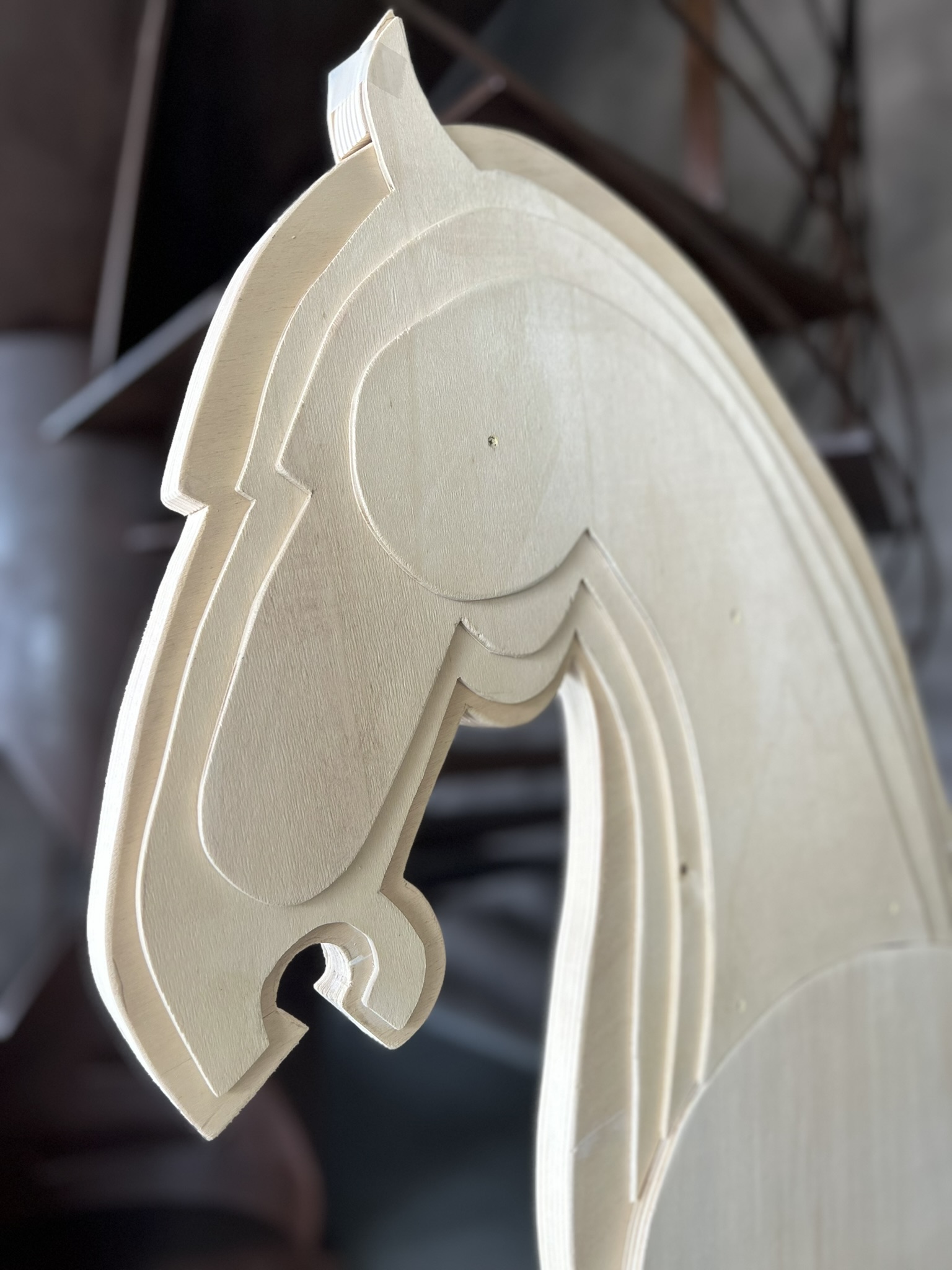
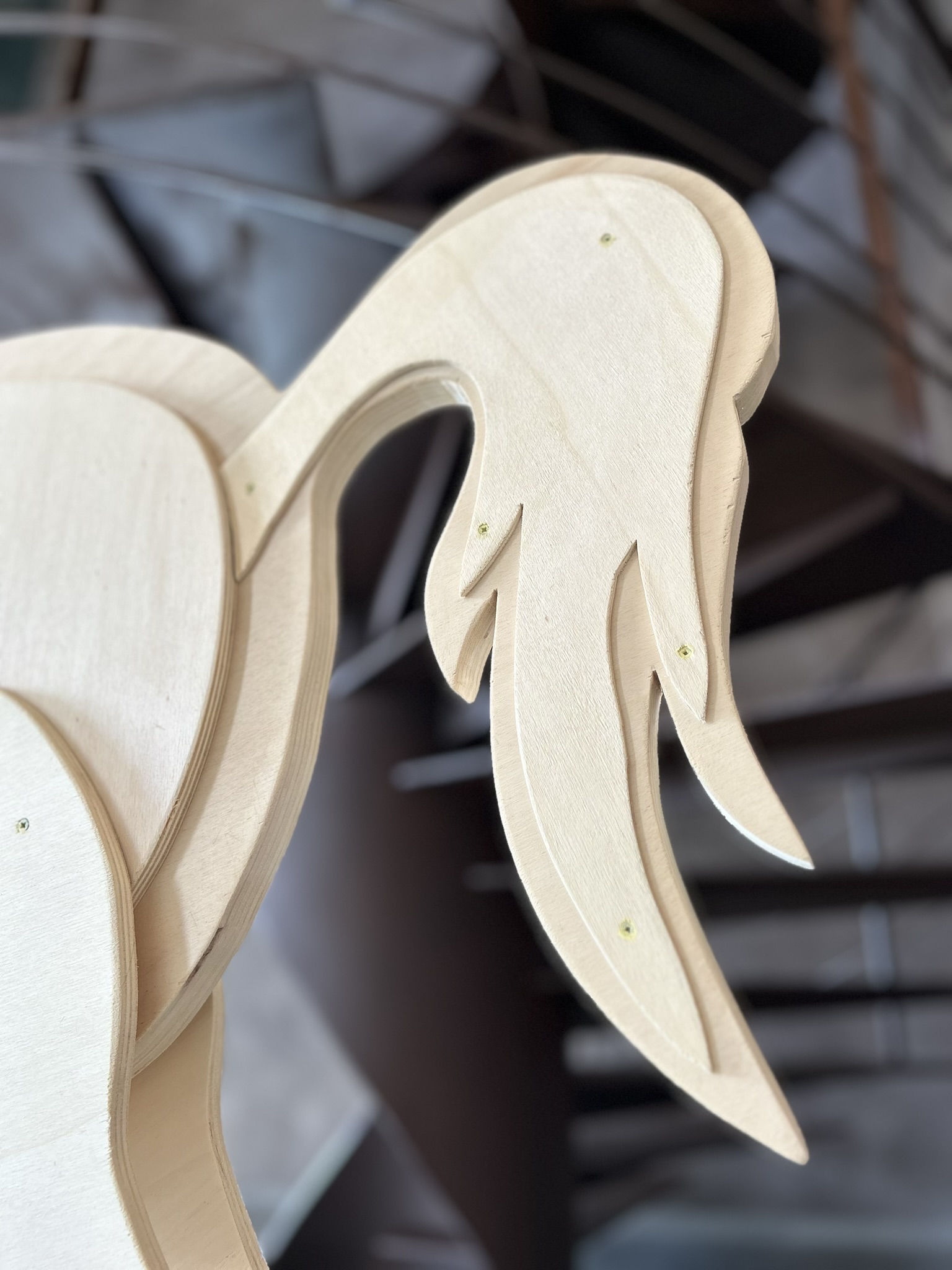
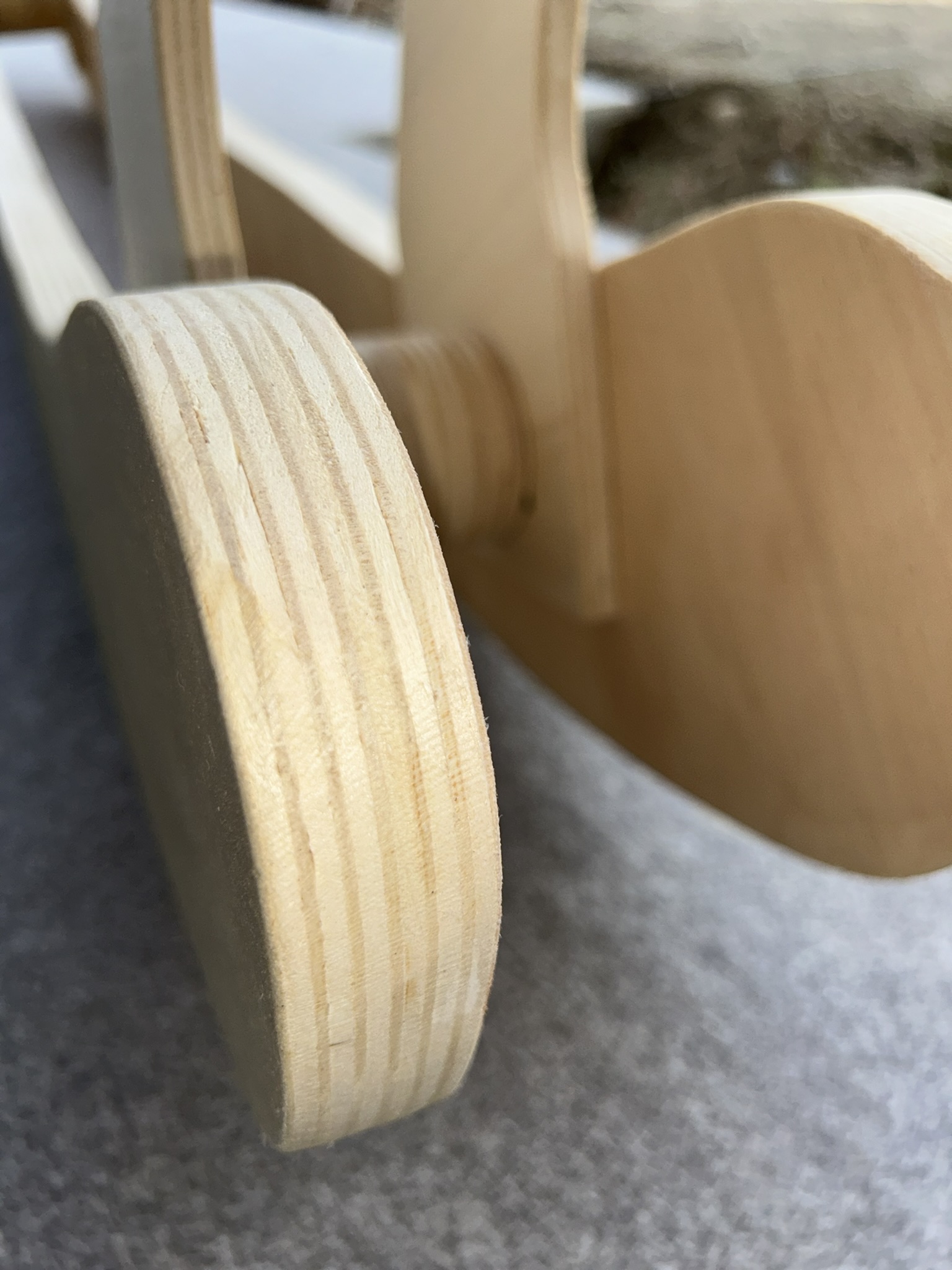
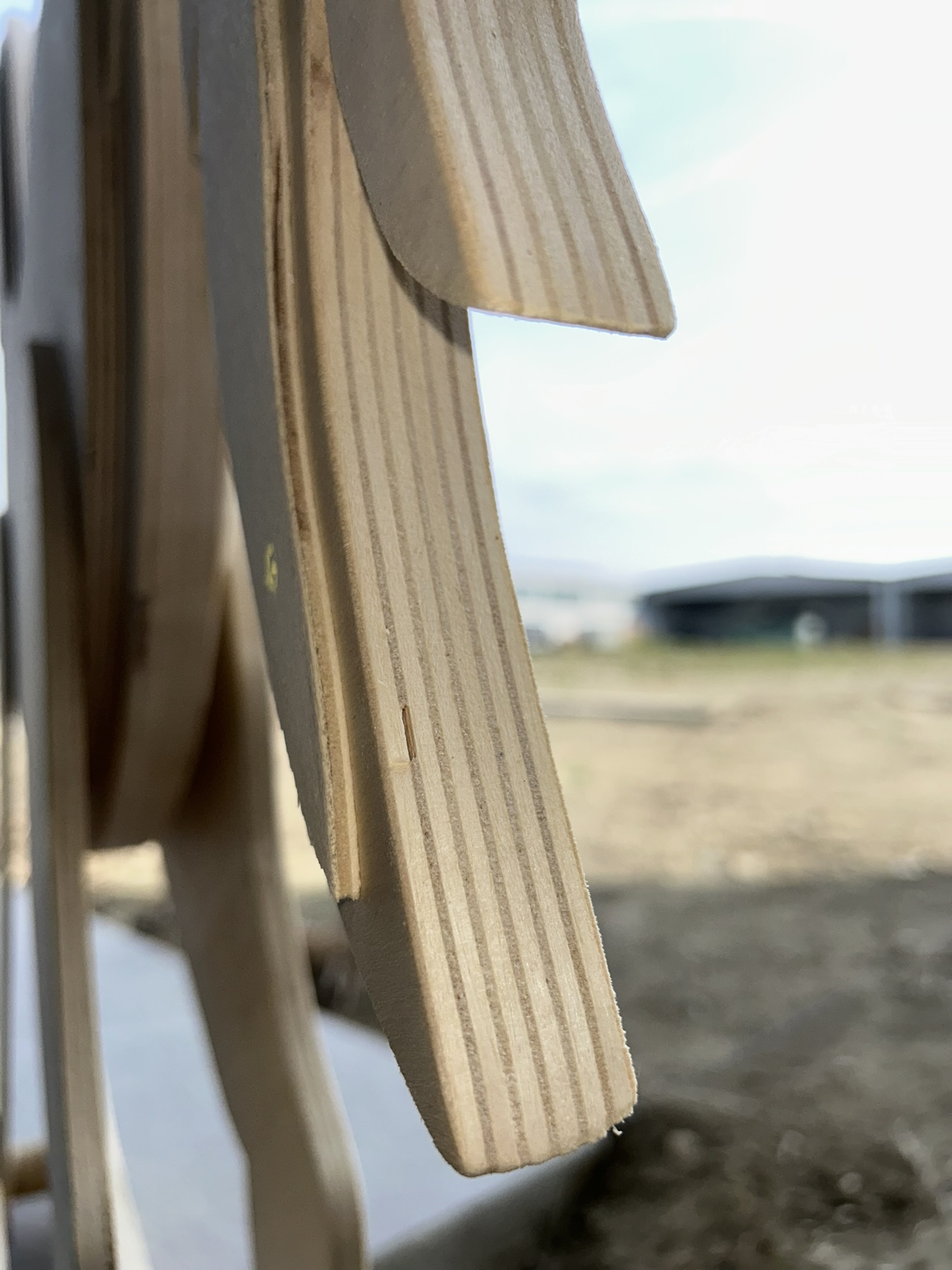
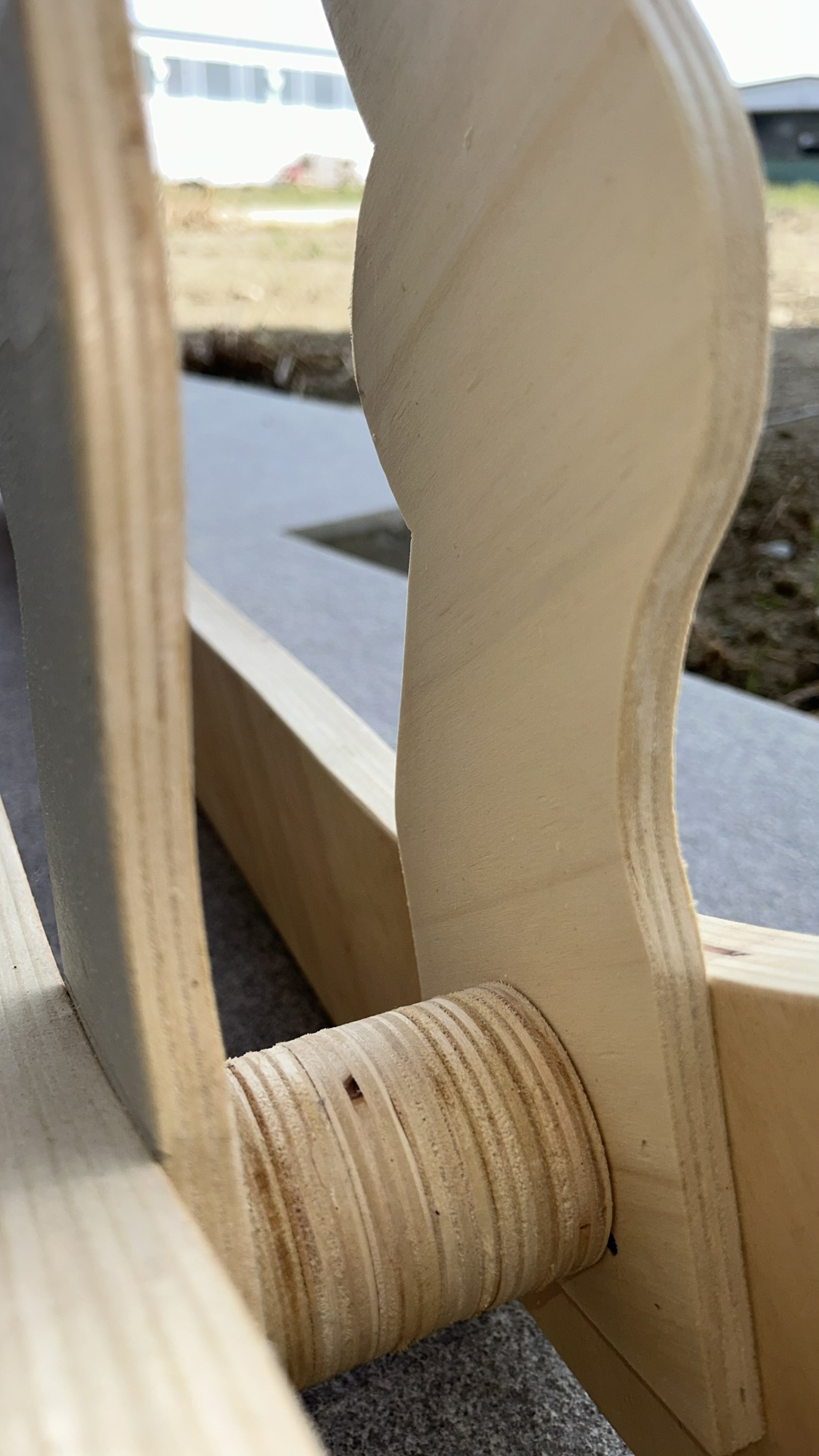
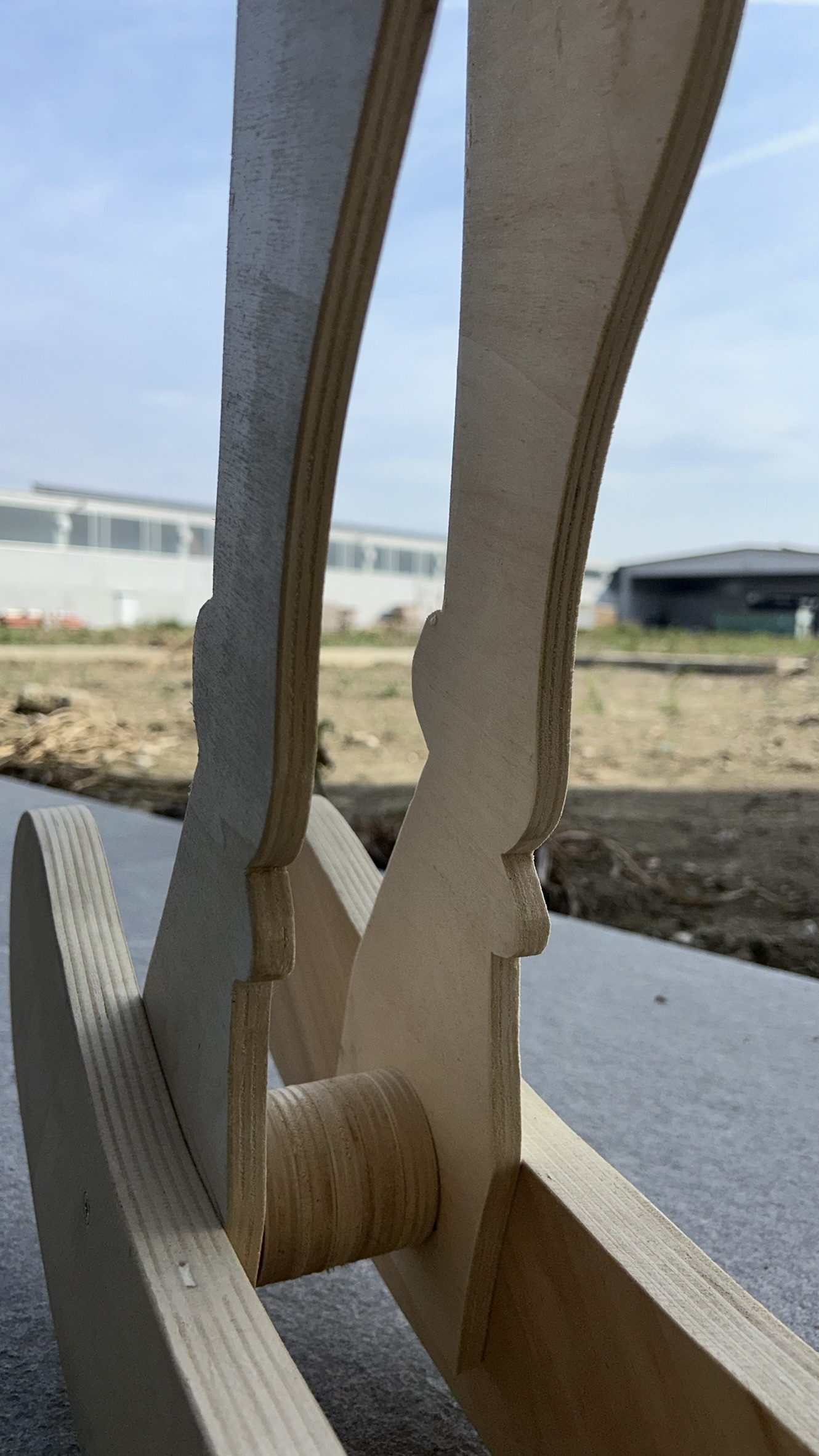
The details of the small plywood horse that Vanni Braga made for the Artoni e Fadani entrance hall.
A museum in a former nursery school
In some forty years of work Vanni has created a great many sets, and many of them can now be seen up close in Castelfranco d’Oglio, in the province of Cremona, inside the former nursery school where Braga and the Tana Liberi Tutti association have set up a small museum. “Five sets are on show at any one time, on rotation, chosen from the ones I built over my years working for the Teatro Testoni”, he says. The arrangement with the theatre is a simple one: when the sets are not being used in current productions, they come back here, where children can see them up close. So the collection changes from year to year. Only one is fixed, the wardrobe: a copy of the one built in the 1990s, which opens up and turns into an enormous dinosaur and has also become the symbol of the association.
Where our work takes on another shape
We are used to seeing our panels become a piece of furniture, a wall, a fit-out. Seeing what they can become in an artist’s hands was a real pleasure, and for a moment it filled us with the same wonder as the children in front of a wooden horse, or a wardrobe with a dinosaur hidden inside. The value of a panel also lies in what imagination can turn it into. Our job is to make sure it is the right panel. Yours is to give it shape.